What Does "Outlier Behaviour" Mean in Scopus? A Researcher's Guide
If you have ever reviewed a Scopus discontinued sources list, you may have noticed a recurring reason for discontinuation:
Outlier Behaviour
For many researchers, the phrase sounds technical and somewhat alarming.
What exactly does it mean?
Does it automatically mean a journal is predatory?
Should researchers avoid such journals?
This article explains the concept of Outlier Behaviour, how it relates to journal evaluation, and why researchers should pay attention to it when selecting publication venues.
Why Researchers Encounter This Term
Scopus regularly evaluates journals included in its database.
The goal is to maintain the quality, reliability, and integrity of indexed scholarly literature.
When concerns are identified, Scopus may discontinue coverage of a journal.
One of the most commonly cited reasons is Outlier Behaviour.
Researchers often encounter the term when:
• Checking journal indexing status
• Reviewing discontinued journal lists
• Verifying publication venues
• Evaluating journal quality
Understanding the term helps researchers make more informed publication decisions.
What Is Outlier Behaviour?
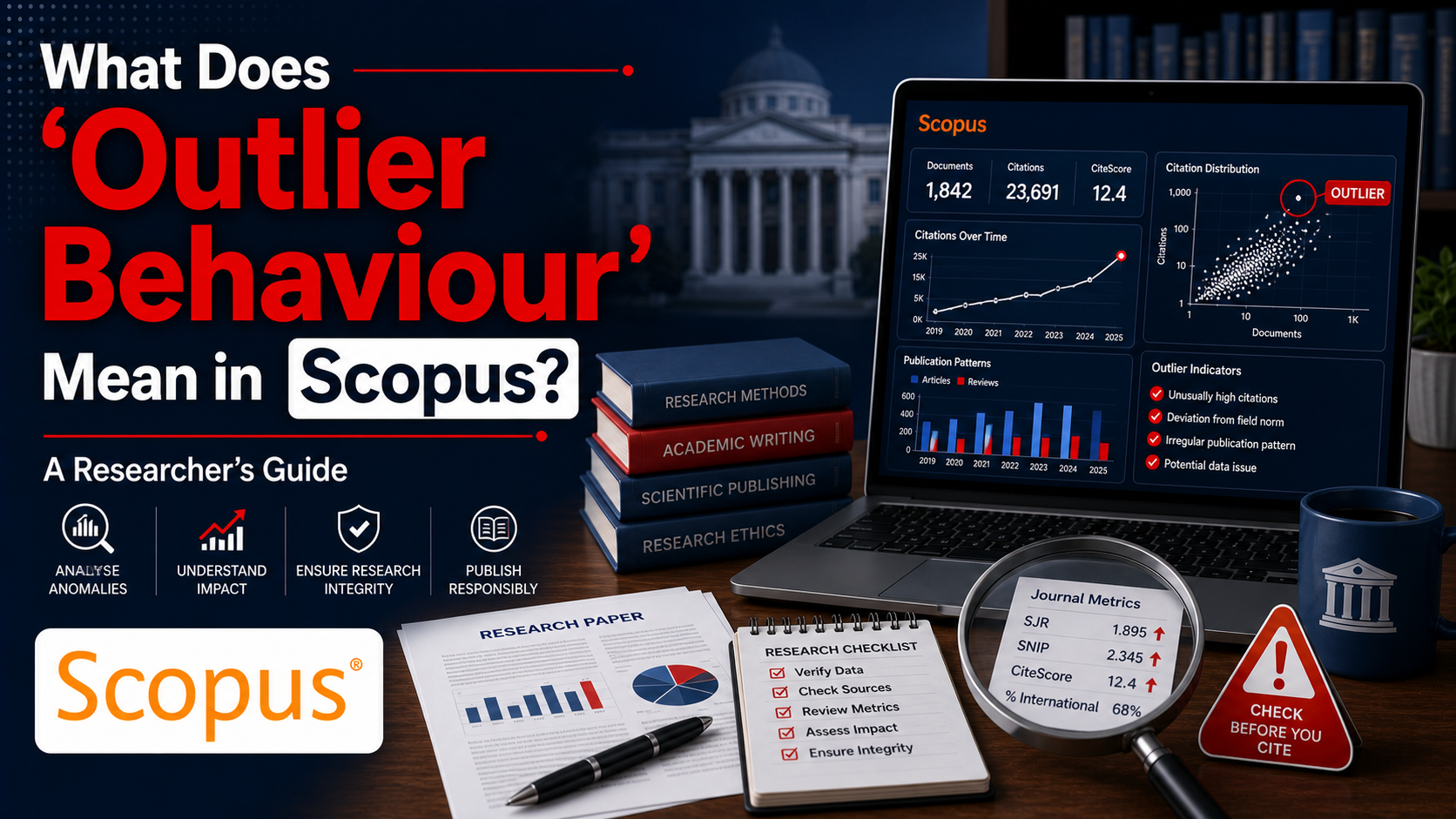
In simple terms, Outlier Behaviour refers to unusual patterns that differ significantly from expected publishing or citation trends.
These patterns may raise concerns during journal evaluations.
The term does not describe a single issue.
Rather, it reflects indicators that suggest the journal's performance differs substantially from comparable journals within its field.
Outlier patterns may involve:
• Citation activity
• Publication practices
• Editorial processes
• Indexing performance
• Scholarly influence metrics
The exact factors evaluated are not always publicly disclosed in detail.
Why Does Scopus Monitor Outlier Behaviour?
Academic databases are designed to help researchers discover reliable scholarly content.
To maintain quality standards, indexing databases must monitor journals for unusual activity.
Potential concerns may include:
• Abnormal citation patterns
• Rapid changes in publication volume
• Unusual editorial behavior
• Metric manipulation concerns
• Publishing practices that differ substantially from accepted standards
Monitoring helps preserve trust in the indexing ecosystem.
Does Outlier Behaviour Mean a Journal Is Predatory?
No.
This is one of the most common misconceptions.
A journal discontinued for Outlier Behaviour is not automatically classified as predatory.
The two concepts are different.
A journal may:
• Continue publishing
• Maintain peer review
• Retain an editorial board
• Operate as an active publication
However, Scopus may still determine that continued indexing is not appropriate based on evaluation findings.
Researchers should avoid assuming that discontinuation automatically indicates misconduct.
What Happens After a Journal Is Discontinued?
Discontinuation generally affects future indexing coverage.
In many cases:
• Previously indexed articles remain searchable
• Existing records stay within the database
• Future articles may no longer be indexed
The journal itself may continue operating independently.
This distinction is important for researchers considering future submissions.
Why Researchers Should Care
Many institutions evaluate research output using indexing criteria.
Publishing in a journal that is no longer actively indexed may affect:
• Promotion requirements
• Graduation requirements
• Funding applications
• Research assessments
• Institutional reporting
Before submitting a manuscript, researchers should verify the journal's current indexing status.
How to Protect Yourself
A simple journal verification process can help reduce publication risks.
Before submission:
Verify Indexing Status
Do not rely solely on journal websites.
Confirm indexing through official databases.
Review Recent Journal Updates
Check whether the journal has experienced:
• Coverage changes
• Indexing discontinuation
• Publisher transitions
• Editorial changes
Evaluate Journal Quality Holistically
Consider:
• Scope alignment
• Editorial board quality
• Peer-review transparency
• Publisher reputation
• Published article quality
Indexing is important, but it is only one component of journal evaluation.
Common Questions About Outlier Behaviour
Is Outlier Behaviour a permanent label?
Not necessarily.
Journal evaluations may change over time depending on editorial improvements and future assessments.
Can a discontinued journal still publish papers?
Yes.
Discontinuation affects indexing coverage, not necessarily journal operations.
Should I avoid all discontinued journals?
Researchers should evaluate each case individually while considering institutional requirements and publication goals.
Final Thoughts
Outlier Behaviour is one of the most frequently misunderstood terms in academic publishing.
Rather than viewing it as a simple warning label, researchers should understand it as part of a broader journal evaluation process.
The safest publication strategy is always the same:
• Verify indexing status
• Evaluate journal quality
• Review editorial standards
• Confirm publication requirements
Strong research deserves informed journal selection.
Taking a few minutes to verify a journal today can prevent publication challenges tomorrow.
Frequently Asked Questions
What is Outlier Behaviour in Scopus?
Outlier Behaviour refers to unusual patterns identified during journal evaluations that differ significantly from expected publishing or citation trends.
Does Outlier Behaviour mean a journal is fake?
No. It indicates concerns identified during evaluation but does not automatically classify a journal as predatory.
Can a journal recover after discontinuation?
Journal status may change over time depending on future evaluations and improvements.
Why is Outlier Behaviour frequently mentioned in discontinuation lists?
Because it is one of the common reasons cited when Scopus determines that continued coverage is no longer appropriate.