How to Choose the Right Journal: Understanding Impact Factor, JCR, CiteScore, SJR & Quartiles (Complete Guide for Researchers)
Choosing a journal for your research paper is one of the most important decisions you'll make in the publication process.
Yet, it's also one of the most confusing.
Should you submit to the journal with the highest Impact Factor?
Does a Q1 journal always mean it's the best choice?
Is CiteScore more important than Impact Factor?
What exactly are SJR and SNIP?
Many researchers, especially first-time authors, spend months conducting high-quality research only to submit their manuscript to an unsuitable journal. The result is often a desk rejection, unnecessary delays, and frustration that could have been avoided with better journal selection.
The reality is that no single metric can tell you whether a journal is the right destination for your research. Journal metrics are useful tools, but only when they are understood and applied correctly.
In this comprehensive guide, we'll explain the most widely used journal evaluation metrics, including Impact Factor, Journal Citation Reports (JCR), CiteScore, SCImago Journal Rank (SJR), Source Normalized Impact per Paper (SNIP), and journal quartiles. More importantly, you'll learn how to use these metrics together to choose a journal that matches your research, career goals, and publication strategy.
Whether you're publishing your first paper or planning your next submission, this guide will help you make informed decisions with confidence.
Why Choosing the Right Journal Matters
Many researchers assume that publishing in the highest-ranked journal is always the best strategy.
In practice, successful publishing is about finding the right fit, not simply the highest metric.
Choosing an appropriate journal affects:
• Your chances of acceptance
• The speed of peer review
• The visibility of your research
• Future citations
• Career progression
• Grant and funding opportunities
• Academic reputation
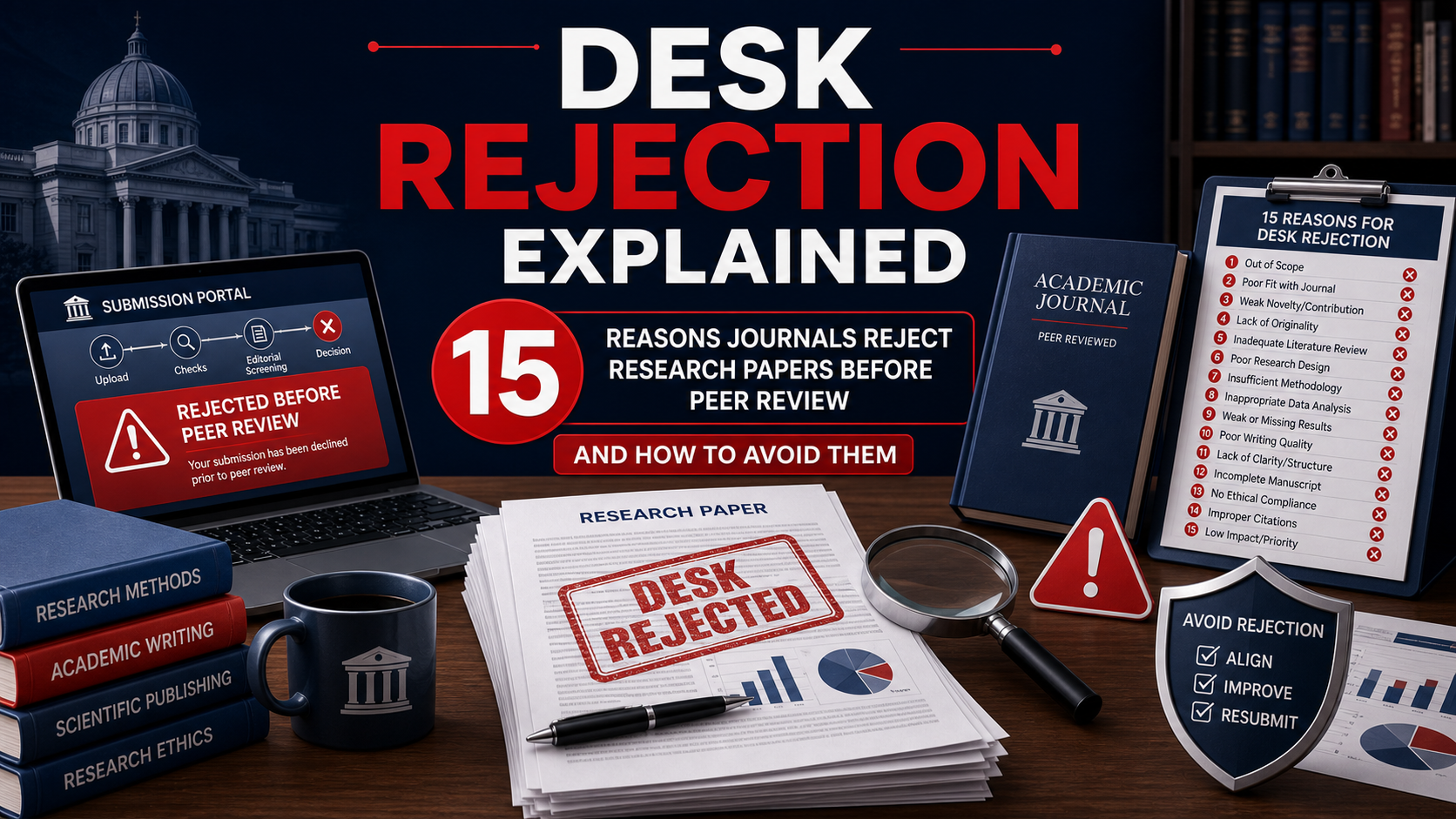
Submitting to an unsuitable journal often leads to immediate rejection before peer review, even when the research itself is scientifically sound.
Editors evaluate more than scientific quality. They also consider whether your work aligns with the journal's aims, readership, and editorial priorities.
A carefully selected journal significantly improves your chances of progressing through peer review.
The Biggest Mistakes Researchers Make When Choosing a Journal
Over the years, editors have observed several common mistakes made by authors during journal selection.
Choosing Only by Impact Factor
Perhaps the biggest misconception in academic publishing is believing that the journal with the highest Impact Factor is automatically the best destination for every manuscript.
A journal may have an excellent reputation yet still be completely unsuitable for your research topic.
For example, submitting a pharmaceutical formulation study to a high-impact cardiology journal is unlikely to succeed, regardless of the quality of the research.
Journal fit always comes before journal prestige.
Ignoring the Journal's Scope
Every journal clearly defines the topics and types of manuscripts it publishes.
Unfortunately, many researchers skip this section entirely.
Editors frequently reject manuscripts simply because they fall outside the journal's stated aims and scope.
Before considering any journal metric, ask yourself one question:
Would readers of this journal genuinely find my research relevant?
If the answer is uncertain, continue searching.
Looking Only at Quartiles
Many universities encourage researchers to publish in Q1 journals.
While journal quartiles are useful indicators of relative standing within a subject category, they should never be the only deciding factor.
A Q2 journal that closely matches your research area may offer a much higher probability of acceptance than a broadly focused Q1 journal.
Publishing successfully in the right journal is often more valuable than repeatedly targeting journals where acceptance is unlikely.
Ignoring Publication Timelines
Some journals complete peer review within a few weeks.
Others may take six months or longer before making an editorial decision.
If your publication is linked to graduation requirements, grant deadlines, or promotion criteria, editorial speed becomes an important consideration.
Many journals publish average review and publication times on their websites.
Overlooking Journal Reputation
Not every journal that advertises indexing or impact metrics maintains strong editorial standards.
Researchers should always verify:
• Whether the journal is indexed in trusted databases.
• Whether it follows recognized publication ethics.
• Whether editorial board information is transparent.
• Whether previous issues demonstrate consistent publication quality.
Taking a few minutes to investigate a journal's reputation can help you avoid predatory publishers and questionable publication practices.
Should You Choose a Journal Based on Impact Factor Alone?
The short answer is no.
Impact Factor is one of the most recognized journal metrics in academic publishing, but it was never intended to measure the quality of individual research papers.
Instead, it measures the average number of citations received by recent articles published in a journal over a defined period.
A high Impact Factor generally indicates that articles published in the journal receive more citations, but it does not guarantee that every article published there is highly influential.
Similarly, excellent research is regularly published in journals with modest Impact Factors.
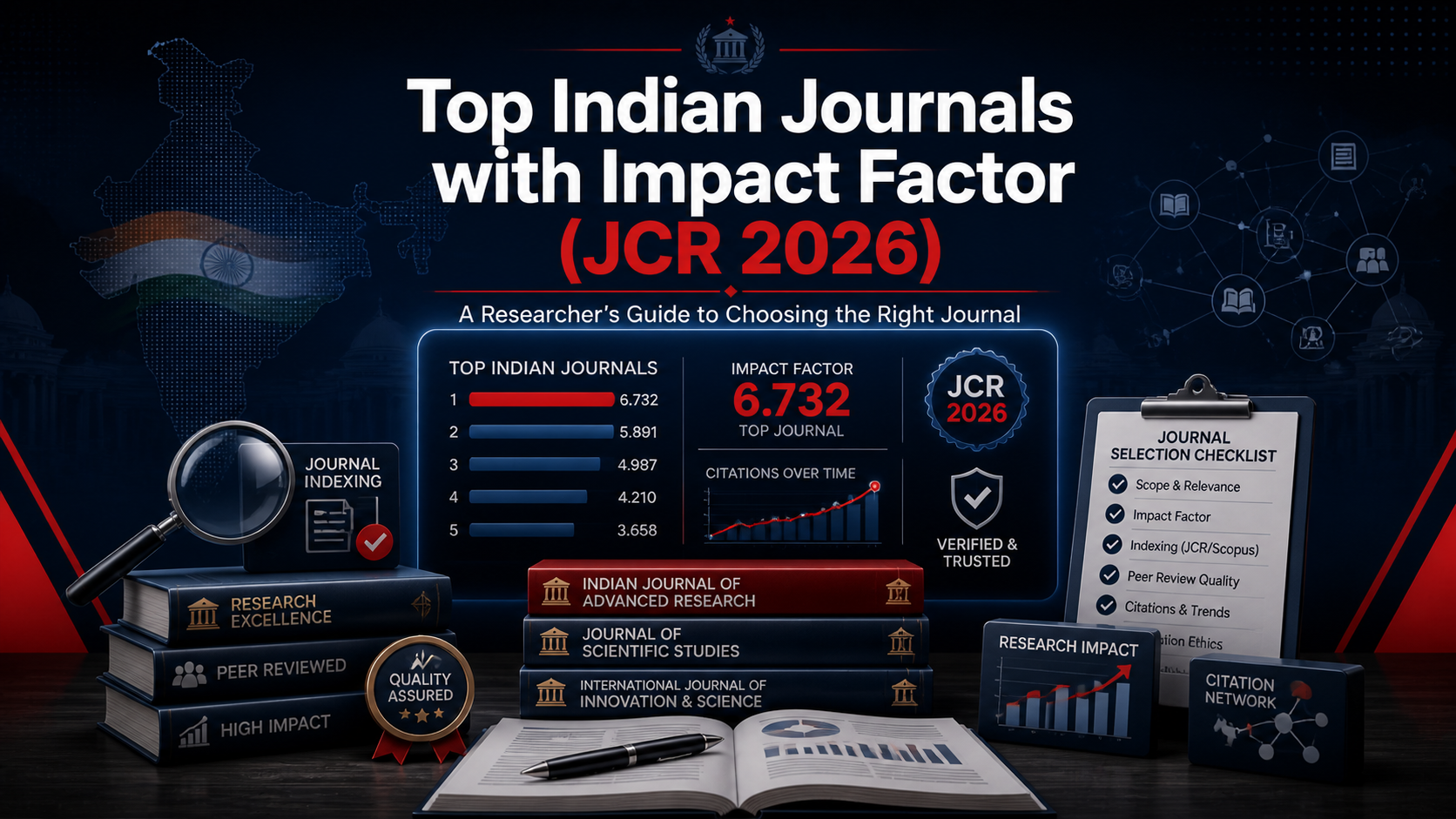
Several factors should influence journal selection, including:
• Journal scope
• Target audience
• Editorial quality
• Peer-review process
• Publication speed
• Open access options
• Indexing
• Acceptance rate
• Ethical standards
Journal metrics should support your decision—not make it for you.
What Is Impact Factor?
The Journal Impact Factor (JIF) is one of the oldest and most widely recognized journal metrics.
It is published annually by Clarivate through the Journal Citation Reports (JCR) database.
Impact Factor estimates how frequently articles published in a journal are cited by other researchers.
In simple terms, it answers the question:
"On average, how many times were recent articles from this journal cited?"
For example, if a journal has an Impact Factor of 6.2, it means that articles published during the previous two years received an average of approximately 6.2 citations during the calculation period.
It is important to remember that this is an average.
Some articles may receive hundreds of citations, while others receive none.
Therefore, Impact Factor should never be interpreted as a measure of the quality of an individual paper.
How Is Impact Factor Calculated?
Although the underlying methodology is more detailed, the basic calculation is straightforward.
The Journal Impact Factor is calculated by dividing:
The number of citations received in the current year to articles published during the previous two years
by
The total number of citable articles published during those two years.
For example:
A journal published:
• 220 research articles in 2023
• 180 research articles in 2024
Total citable items = 400
During 2025, those articles received:
2,800 citations
Impact Factor:
2,800 ÷ 400 = 7.0
This means the journal's Impact Factor would be 7.0.
Remember that citation behaviour varies considerably between disciplines. Fields such as medicine and molecular biology typically generate citations much faster than mathematics, engineering, or some areas of the social sciences.
For this reason, comparing Impact Factors across different disciplines is rarely meaningful.
What Is Journal Citation Reports (JCR)?
Many researchers mistakenly think that Journal Citation Reports and Impact Factor are the same thing.
They are closely related, but they are not identical.
Journal Citation Reports (JCR) is Clarivate's journal evaluation platform.
Think of it as a comprehensive database that provides information about journals indexed in the Web of Science Core Collection.
Within JCR, researchers can access information such as:
• Journal Impact Factor
• Journal Citation Indicator (JCI)
• Journal rankings
• Subject categories
• Quartile rankings
• Citation trends
• Self-citation data
• Open access information
In other words, the Impact Factor is one metric contained within the broader Journal Citation Reports platform.
If you're evaluating journals indexed in Web of Science, JCR is one of the most authoritative resources available.
What Is CiteScore?
While Impact Factor comes from Clarivate, CiteScore is published by Elsevier and is based on data from the Scopus database.
Like Impact Factor, CiteScore measures the citation performance of journals.
However, it uses a different methodology.
Instead of considering only a two-year publication window, CiteScore evaluates citations across a four-year period.
Because Scopus indexes a broader range of journals than Web of Science in many disciplines, researchers may find CiteScore available for journals that do not have an official Journal Impact Factor.
Many universities now consider both Impact Factor and CiteScore when evaluating journals.
Neither metric is universally "better." They simply measure citation performance using different databases and calculation methods.
How Is CiteScore Calculated?
CiteScore is calculated using:
Total citations received during a four-year period
divided by
The total number of documents published during those same four years.
Because of this longer evaluation window, CiteScore often provides a broader picture of a journal's citation performance over time.
It is particularly useful in disciplines where citations accumulate more gradually.
Impact Factor vs CiteScore
Researchers often ask which metric they should trust.
The answer depends on the journal and your field.
Here's a simplified comparison.
| Feature | Impact Factor | CiteScore |
|---|---|---|
| Published by | Clarivate | Elsevier |
| Database | Web of Science | Scopus |
| Citation window | 2 years | 4 years |
| Updated | Annually | Annually |
| Available for | Web of Science journals | Scopus-indexed journals |
| Commonly used for | Academic evaluation, funding, promotions | Journal comparison, Scopus evaluation |
Neither metric replaces the other.
Instead, they provide complementary information about a journal's citation performance.
When evaluating potential journals, it is often useful to consider both rather than relying exclusively on one metric.
Which Is More Important: Impact Factor or CiteScore?
There is no universal answer.
In some institutions, Impact Factor remains the preferred metric because of its long history and widespread recognition.
In others, particularly where Scopus-indexed publications are emphasized, CiteScore receives equal or greater attention.
Rather than asking which metric is "better," researchers should ask a more practical question:
Does this journal have strong citation performance, good editorial standards, and the right audience for my research?
That question leads to much better publication decisions than chasing a single number.
What Is SCImago Journal Rank (SJR)?
While Impact Factor and CiteScore primarily measure citation counts, SCImago Journal Rank (SJR) goes a step further by considering where those citations come from.
Developed using data from the Scopus database, SJR evaluates not only the number of citations a journal receives but also the prestige of the journals providing those citations.
Think of it this way:
A citation from a highly respected journal carries more weight than a citation from a lesser-known journal.
This concept is similar to how search engines rank websites, where links from authoritative websites are considered more valuable than links from unknown sources.
Because of this weighted approach, SJR is often regarded as an indicator of both citation impact and journal prestige.
Why Does SJR Matter?
Imagine two journals.
Both receive 1,000 citations.
However:
• Journal A is cited mostly by internationally respected journals.
• Journal B is cited primarily by smaller journals with limited influence.
Although the citation count is identical, Journal A is generally considered more influential within the academic community.
SJR captures this difference.
Researchers often use SJR to compare journals within the same discipline, especially when selecting between multiple Scopus-indexed journals.
What Is SNIP?
Another important Scopus-based metric is Source Normalized Impact per Paper (SNIP).
Unlike Impact Factor or CiteScore, SNIP adjusts for differences in citation behaviour between research disciplines.
This is important because citation practices vary dramatically.
For example:
Biomedical research papers often receive many citations within a short period.
Mathematics and engineering papers usually accumulate citations more slowly.
If we compared journals using raw citation counts alone, journals in rapidly citing disciplines would almost always appear stronger.
SNIP solves this problem by normalizing citation impact according to the citation characteristics of each field.
This makes comparisons within and across disciplines more meaningful.
Why Is SNIP Useful?
SNIP helps researchers answer an important question:
"How well does this journal perform compared with other journals in its own subject area?"
A higher SNIP value generally indicates stronger citation performance after accounting for differences between disciplines.
Many universities and research institutions use SNIP alongside other journal metrics when evaluating publication quality.
What Are Journal Quartiles?
If you've searched for journals before, you've probably encountered terms such as:
• Q1
• Q2
• Q3
• Q4
These are known as journal quartiles.
Quartiles rank journals within a specific subject category.
Instead of looking only at raw citation metrics, journals are divided into four equal groups based on their overall performance.
Q1 Journals
The top 25% of journals within a subject category.
These journals typically have:
• Strong editorial standards
• High visibility
• Greater citation impact
• Competitive acceptance rates
Q2 Journals
Journals ranked between the top 25% and 50%.
These journals are well respected and often represent an excellent balance between quality and publication opportunities.
Q3 Journals
Journals ranked between the 50th and 75th percentile.
Many reputable regional and specialized journals fall into this category.
Q4 Journals
The remaining 25% of journals within a subject category.
Being a Q4 journal does not automatically mean a journal is poor.
Many newer journals begin in Q4 before improving over time.
Similarly, niche journals serving specialized research communities may remain in lower quartiles despite publishing valuable research.
Does Q1 Always Mean Better?
Not necessarily.
This is one of the biggest misconceptions among researchers.
Suppose your research focuses on traditional herbal formulations.
A specialized Q2 pharmaceutical journal may provide:
• Better readership
• More appropriate reviewers
• Higher acceptance probability
• Greater citation potential within your research community
than submitting to a broad multidisciplinary Q1 journal where your work is less relevant.
Publishing in the right journal is usually more valuable than simply publishing in the highest-ranked journal.
What Is Journal Citation Indicator (JCI)?
The Journal Citation Indicator (JCI) is a relatively recent metric introduced by Clarivate.
Unlike Impact Factor, JCI is field-normalized.
This means it compares journals after adjusting for differences in citation behaviour across research disciplines.
A JCI value of:
• 1.0 indicates average citation performance for journals in that field.
• Greater than 1.0 indicates above-average citation performance.
• Less than 1.0 indicates below-average citation performance.
Because JCI accounts for disciplinary differences, it provides a fairer comparison across diverse research areas.
Many researchers now consider JCI alongside Impact Factor when evaluating journals indexed in Web of Science.
Which Journal Metric Should You Trust?
Researchers often ask which metric is the most important.
The truth is that each metric measures something slightly different.
| Metric | Best Used For |
|---|---|
| Impact Factor | Overall citation influence in Web of Science |
| CiteScore | Citation performance using Scopus data |
| SJR | Journal prestige and weighted citation influence |
| SNIP | Fair comparison across different disciplines |
| Quartiles | Relative ranking within a subject category |
| JCI | Field-normalized citation performance |
Rather than relying on a single metric, experienced researchers evaluate journals using several indicators together.
No single number tells the complete story.
A Step-by-Step Framework for Choosing the Right Journal
Instead of searching for the highest metric, follow this practical workflow.
Step 1: Identify Your Research Area
Clearly define your manuscript's primary discipline.
Ask yourself:
• Who will benefit most from this research?
• Which researchers am I trying to reach?
Step 2: Create a Shortlist
Use trusted databases such as:
• Web of Science
• Scopus
• PubMed (where applicable)
• DOAJ (for open-access journals)
Identify 5 to 10 journals that regularly publish work similar to yours.
Step 3: Read Recently Published Articles
Review at least 10–15 recent papers.
Ask:
• Are the research topics similar?
• Is the methodology comparable?
• Would my paper naturally fit among these articles?
If not, remove the journal from your shortlist.
Step 4: Compare Journal Metrics
Review:
• Impact Factor
• CiteScore
• SJR
• Quartile
• JCI (if available)
Remember that these metrics should support your decision—not replace scientific judgement.
Step 5: Check Editorial Information
Review:
• Scope
• Author guidelines
• Acceptance criteria
• Peer-review process
• Publication frequency
• Open access options
Step 6: Consider Practical Factors
Also evaluate:
• Average review time
• Publication fees
• APC requirements
• Open access policies
• Copyright options
• Funding agency requirements
Step 7: Verify Journal Legitimacy
Before submission, always confirm:
✓ The journal is indexed where it claims.
✓ Editorial board members are genuine.
✓ Publication ethics policies are publicly available.
✓ Contact information is transparent.
✓ Published articles maintain consistent quality.
Never rely solely on promotional emails inviting submissions.
Red Flags When Evaluating Journals
Be cautious if a journal:
🚩 Guarantees publication.
🚩 Promises unrealistically fast peer review.
🚩 Hides publication fees.
🚩 Has unclear editorial information.
🚩 Makes false indexing claims.
🚩 Uses misleading Impact Factor terminology.
🚩 Frequently sends aggressive solicitation emails.
Legitimate journals focus on scientific quality—not marketing promises.
Common Myths About Journal Metrics
Myth 1
Higher Impact Factor always means a better journal.
Reality:
Journal fit is often more important than citation metrics.
Myth 2
Q1 journals guarantee higher citations.
Reality:
Poorly matched research may receive fewer citations regardless of journal ranking.
Myth 3
Impact Factor measures the quality of my paper.
Reality:
Impact Factor measures journal citation performance—not individual article quality.
Myth 4
All Scopus-indexed journals have Impact Factors.
Reality:
Many Scopus-indexed journals have CiteScore and SJR but are not indexed in Web of Science and therefore do not have an official Journal Impact Factor.
Researcher Resource
🚀 FREE RESEARCHER RESOURCE
AI in Research: The Complete Ethical Researcher's Guide (2026 Edition)
From choosing the right journal to writing stronger manuscripts, AI can support researchers throughout the publication process—when used responsibly. Download our free guide to learn ethical AI workflows, literature review strategies, prompt engineering, citation verification, and publisher disclosure requirements.
Key Takeaways
• No single journal metric should determine where you submit your manuscript.
• Impact Factor, CiteScore, SJR, SNIP, JCI, and quartiles each measure different aspects of journal performance.
• Always prioritize journal scope and audience before considering citation metrics.
• Compare journals using multiple indicators rather than relying on one number.
• Verify indexing, editorial quality, publication ethics, and review timelines before submission.
• Choosing the right journal can significantly improve your chances of successful publication.
Final Thoughts
Choosing a journal is a strategic decision that goes far beyond selecting the publication with the highest metric.
The most successful researchers begin by identifying journals that genuinely align with their research topic, readership, and scientific contribution. Metrics such as Impact Factor, CiteScore, SJR, SNIP, JCI, and quartiles provide valuable insights, but they should be interpreted within the broader context of journal scope, editorial standards, publication ethics, and audience relevance.
Rather than chasing the highest number, focus on finding the journal where your research will have the greatest impact and the strongest chance of reaching the right readers.
A thoughtful journal selection process not only improves publication success but also helps your work contribute more effectively to the scientific community.
Frequently Asked Questions
Is Impact Factor more important than CiteScore?
Neither metric is universally more important. Impact Factor is based on the Web of Science database, while CiteScore uses Scopus. Their relevance depends on your institution, discipline, and the journals you are comparing.
Can a Scopus-indexed journal have no Impact Factor?
Yes. Many journals indexed in Scopus are not included in the Web of Science Core Collection and therefore do not receive an official Journal Impact Factor from Clarivate.
Is a Q2 journal good?
Absolutely. Many Q2 journals have strong editorial standards, excellent visibility, and are highly respected within their disciplines. For many researchers, a well-matched Q2 journal may be a better publication choice than an unrelated Q1 journal.
Should I choose only Q1 journals?
Not necessarily. Journal fit, readership, acceptance probability, and research relevance are often more important than quartile ranking alone.
Which journal metric is best?
There is no single best metric. Most experienced researchers evaluate journals using a combination of Impact Factor, CiteScore, SJR, SNIP, JCI, quartiles, and qualitative factors such as editorial quality and scope.
Source Verification
This article is based on information from:
• Clarivate Journal Citation Reports (JCR)
• Clarivate Web of Science documentation
• Elsevier Scopus and CiteScore documentation
• SCImago Journal & Country Rank (SJR)
• CWTS Journal Indicators (SNIP)
• Committee on Publication Ethics (COPE)
• Official publisher guidance from Elsevier, Springer Nature, Wiley, and Taylor & Francis
Verification Status
All definitions, metric descriptions, calculation methods, and publication guidance were verified against official documentation from the respective organizations. Because journal metrics are updated annually, readers should consult the latest official sources for current values and rankings.
Last Verified
17 July 2026