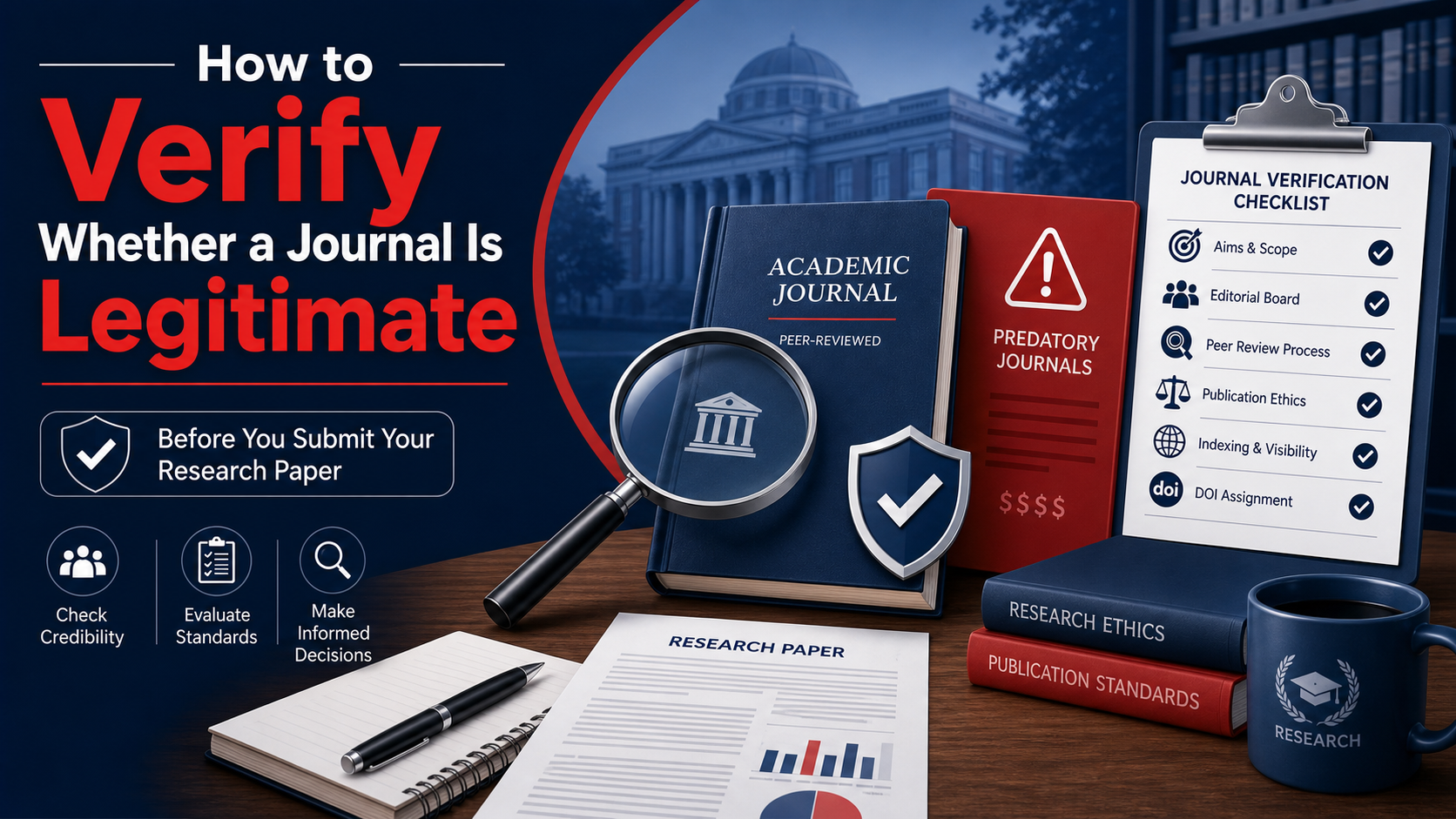
How to Verify Whether a Journal Is Legitimate Before You Submit Your Research Paper
Choosing the right journal is one of the most important decisions in the publication process. Unfortunately, many researchers focus entirely on writing the manuscript and spend very little time evaluating the journal itself.
The result?
• Months of wasted effort
• Publication delays
• Rejected manuscripts
• Loss of publication fees
• Potential damage to academic credibility
This guide provides a practical framework for verifying whether a journal is legitimate before submitting your research paper.
Why Journal Verification Matters
A journal may look professional, have an attractive website, and even promise rapid publication. However, appearances can be misleading.
Some journals operate with poor editorial standards, questionable peer-review practices, or misleading indexing claims.
Before submitting your manuscript, you should verify:
• Indexing status
• Publisher credibility
• Peer-review process
• Journal scope alignment
• Publication ethics
Taking a few minutes to verify these elements can save months of frustration later.
Step 1: Check the Journal's Scope
Start by reading the journal's aims and scope.
Ask yourself:
• Does the journal regularly publish research in my field?
• Are recently published articles relevant to my topic?
• Would the journal's audience benefit from my work?
A mismatch between manuscript topic and journal scope is one of the most common reasons for desk rejection.
Quick Tip
Review at least 10 recent articles from the journal before making a submission decision.
Step 2: Verify Indexing Claims
Many journals advertise themselves as "indexed" without clearly stating where.
Always verify indexing independently.
Common databases include:
• Scopus
• Web of Science
• PubMed
• DOAJ
• Embase
Never rely solely on claims displayed on the journal's website.
Questions to Ask
• Is the journal currently indexed?
• Is coverage active?
• Has the journal been discontinued?
• Is the indexing information up to date?
Independent verification is essential.
Step 3: Investigate the Publisher
A legitimate publisher typically demonstrates transparency.
Review:
• Publisher history
• Editorial policies
• Contact information
• Publication ethics statements
• Editorial board information
Red flags may include:
• Generic email addresses
• Missing physical addresses
• Unclear ownership
• Excessive publication promises
Trustworthy publishers openly disclose their operations and editorial processes.
Step 4: Evaluate the Editorial Board
The editorial board often reveals a great deal about a journal's credibility.
Check:
• Academic affiliations
• Research expertise
• Publication history
• Public academic profiles
Questions to consider:
• Are board members active researchers?
• Do they have expertise in the journal's field?
• Are affiliations clearly stated?
A strong editorial board contributes to publication quality and peer-review integrity.
Step 5: Review Published Articles
Analyze recently published papers.
Look for:
• Research quality
• Writing standards
• Citation practices
• Methodological rigor
• Article formatting consistency
Warning signs include:
• Poor language quality
• Weak methodology
• Minimal references
• Irrelevant content
The quality of published articles often reflects the journal's editorial standards.
Step 6: Examine the Peer Review Process
Legitimate journals clearly explain their review procedures.
Look for information about:
• Review timelines
• Reviewer selection
• Editorial decisions
• Revision procedures
Be cautious if a journal guarantees publication or promises unrealistically fast acceptance.
Quality peer review requires time.
Step 7: Review Publication Fees Carefully
Article Processing Charges (APCs) are not inherently problematic.
However, transparency is essential.
A journal should clearly state:
• Submission fees
• APCs
• Waiver policies
• Refund policies
Unexpected charges or unclear fee structures should raise concerns.
Step 8: Check Publication Ethics Policies
A legitimate journal should have publicly available policies covering:
• Plagiarism
• Data integrity
• Authorship criteria
• Conflict of interest
• Research misconduct
Strong ethical standards are a key indicator of publication quality.
Common Warning Signs of Questionable Journals
Watch for these indicators:
• Unrealistic publication guarantees
• Extremely rapid acceptance promises
• Fake indexing claims
• Poor website quality
• Lack of editorial transparency
• Aggressive email solicitations
• Unclear peer-review procedures
One warning sign may not be enough to dismiss a journal, but multiple red flags should prompt caution.
A Simple Journal Verification Checklist
Before submission, confirm:
✅ Journal scope aligns with your research
✅ Indexing status verified independently
✅ Publisher information is transparent
✅ Editorial board is credible
✅ Recent articles demonstrate quality
✅ Peer-review process is clearly described
✅ Publication fees are disclosed
✅ Ethics policies are available
If all eight boxes are checked, you can proceed with greater confidence.
Final Thoughts
Publishing research requires significant time, effort, and expertise. Protecting that effort begins with selecting the right journal.
Rather than relying on marketing claims, use a systematic verification process.
A few minutes of due diligence today can prevent months of disappointment tomorrow.
The most successful researchers do not simply write strong papers.
They submit them to the right journals.
Frequently Asked Questions
How can I verify whether a journal is indexed?
Always verify indexing directly through the relevant database rather than relying solely on claims made by the journal website.
Can a journal still operate after being discontinued from an indexing database?
Yes. A journal may continue publishing even if coverage in a specific database has been discontinued.
Is a publication fee a sign of a predatory journal?
No. Many reputable journals charge publication fees. Transparency and editorial quality are more important indicators.
Why are manuscripts rejected before peer review?
Common reasons include journal scope mismatch, formatting issues, and failure to meet editorial requirements.