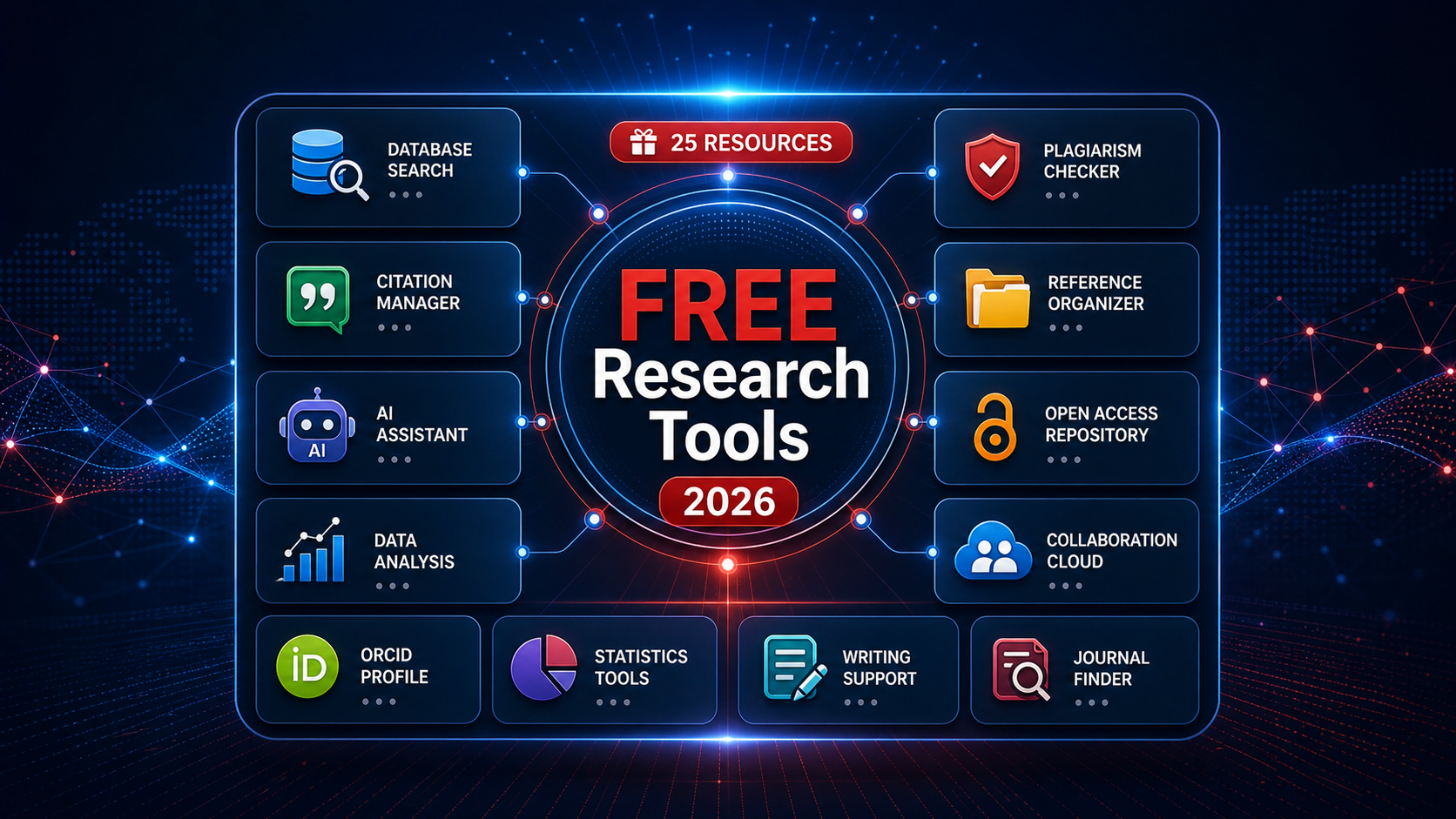
25 Free Resources Every Researcher Should Know in 2026
Modern research is no longer limited by access to information.
Instead, researchers face a different challenge:
Information overload.
Thousands of papers are published every day. Literature reviews take weeks. References become difficult to manage. Writing and publishing require multiple tools and workflows.
Fortunately, there are excellent free resources available that can dramatically improve research efficiency.
Whether you are a PhD student, early-career researcher, faculty member, or independent scholar, these resources can help you save time and focus on what matters most: producing quality research.
Literature Discovery & Research Mapping
1. Connected Papers
Visualize relationships between research papers and discover influential studies within a field.
Best for:
• Literature reviews
• Finding foundational papers
• Exploring citation networks
2. Research Rabbit
Often described as a "Spotify for research."
Creates personalized research maps and continuously recommends relevant papers.
Best for:
• Ongoing literature tracking
• Research discovery
• Building collections
3. Litmaps
Helps researchers monitor new publications and visualize research landscapes.
Best for:
• Tracking emerging studies
• Research monitoring
• Citation exploration
4. Semantic Scholar
AI-powered academic search engine with advanced filtering and citation analysis.
Best for:
• Paper discovery
• Citation analysis
• Research exploration
5. Google Scholar
A fundamental tool for finding scholarly literature across disciplines.
Best for:
• Broad literature searches
• Citation tracking
• Author profiles
Reference Management
6. Zotero
One of the most popular free reference managers.
Features:
• Citation generation
• PDF organization
• Browser integration
7. Mendeley
Reference management and academic collaboration platform.
Best for:
• Organizing references
• Managing PDFs
• Academic networking
8. JabRef
Open-source reference manager particularly popular among LaTeX users.
Academic Writing & Editing
9. Grammarly Free
Helps identify grammar and clarity issues.
Best for:
• Proofreading
• Readability improvements
• Language polishing
10. Hemingway Editor
Highlights overly complex sentences and readability concerns.
Best for:
• Simplifying academic writing
• Improving clarity
11. LanguageTool
Open-source alternative for grammar and language checking.
AI Tools for Researchers
12. Consensus
Searches scientific literature and summarizes evidence-based findings.
Best for:
• Research questions
• Evidence discovery
• Literature synthesis
13. Elicit
Uses AI to assist with literature reviews and evidence extraction.
Best for:
• Systematic reviews
• Research synthesis
14. Perplexity
Useful for exploring topics and locating supporting sources.
Best for:
• Preliminary research
• Topic familiarization
15. ChatGPT
Can assist with:
• Outlining
• Summarization
• Idea generation
• Research workflows
Use responsibly and always verify outputs.
Data Analysis & Statistics
16. JASP
Free statistical software with a user-friendly interface.
Best for:
• Statistical analysis
• Hypothesis testing
• Bayesian statistics
17. Jamovi
Open-source alternative to commercial statistical software.
18. R Project
Powerful platform for advanced statistical computing and visualization.
Research Collaboration
19. Overleaf
Collaborative LaTeX writing platform.
Ideal for:
• Manuscripts
• Theses
• Technical papers
20. GitHub
Excellent for version control, code sharing, and collaborative research projects.
Research Visibility
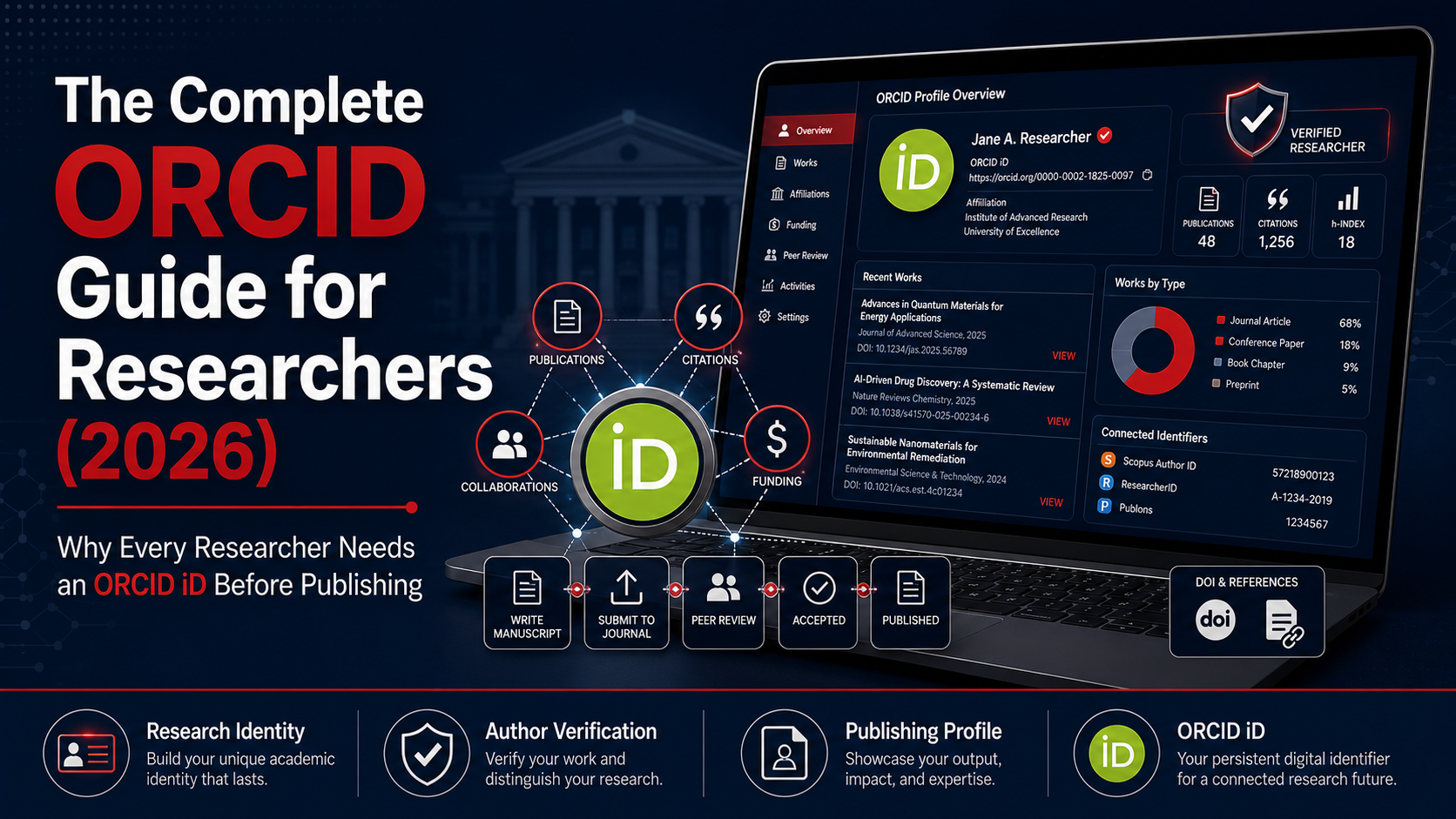
21. ORCID
Provides a persistent researcher identifier.
Important for:
• Author identification
• Publication tracking
• Grant applications
22. Google Scholar Profile
Helps showcase publications and track citations.
23. ResearchGate
Academic networking platform for sharing research outputs.
Journal Selection & Publication
24. DOAJ
Directory of Open Access Journals.
Useful for identifying reputable open-access journals.
25. Think. Check. Submit.
Provides practical guidance for evaluating journals before submission.
A valuable resource for avoiding questionable publication venues.
How to Build Your Personal Research Stack
Researchers do not need all 25 resources.
A practical setup might include:
Literature Discovery
• Connected Papers
• Research Rabbit
Reference Management
• Zotero
Writing
• Grammarly
• Hemingway Editor
AI Assistance
• Consensus
• Elicit
Publication
• ORCID
• Think. Check. Submit.
The goal is not to collect tools.
The goal is to create an efficient workflow.
Common Mistakes Researchers Make
Avoid:
❌ Using too many tools simultaneously
❌ Relying on AI without verification
❌ Ignoring reference management
❌ Failing to organize literature systematically
❌ Waiting until submission to think about journal selection
Tools support research.
They do not replace critical thinking.
Final Thoughts
Research is challenging enough without inefficient workflows.
The right resources can help researchers:
• Save time
• Improve organization
• Strengthen writing
• Discover relevant literature
• Make better publication decisions
Start with a few tools that address your biggest bottlenecks.
Then gradually build a research system that supports consistent progress.
The most productive researchers are not necessarily those who work the hardest.
They are often the ones with the best systems.
Frequently Asked Questions
Which free tool is best for literature reviews?
Research Rabbit, Connected Papers, and Elicit are among the most popular options for literature discovery and synthesis.
Is Zotero better than manual reference management?
For most researchers, yes. It saves significant time and reduces citation errors.
Are AI tools replacing researchers?
No. AI tools can assist with workflows, but researchers remain responsible for analysis, interpretation, and scientific integrity.
Which resource should every PhD student start with?
A strong starting combination is Zotero, Google Scholar, ORCID, and Research Rabbit.
Do I need paid software to conduct quality research?
Not necessarily. Many high-quality research workflows can be built entirely using free resources.