World's First Gene Therapy Delivered Directly to an Infant's Brain Offers New Hope for Rare Genetic Epilepsy
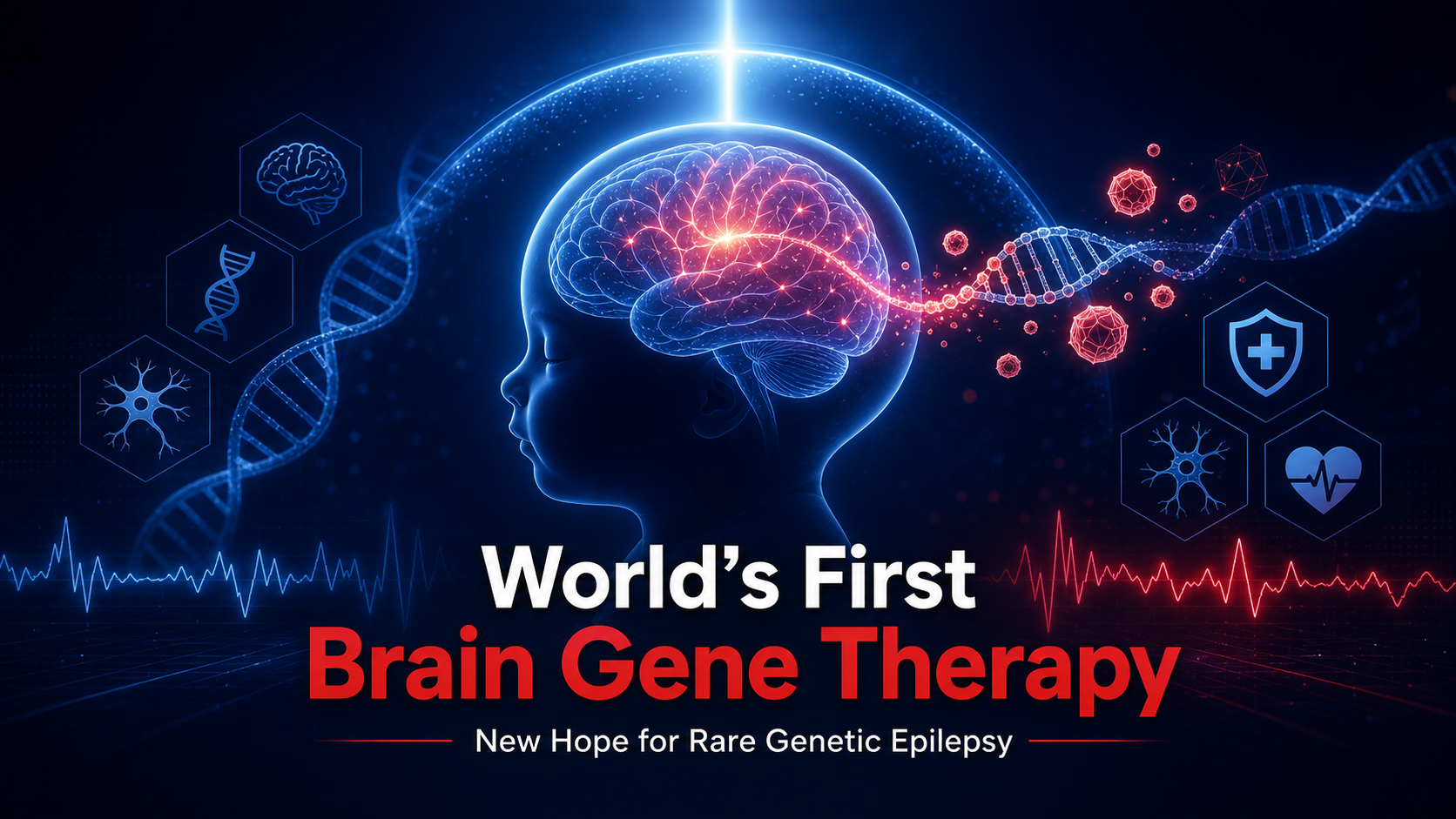
In a landmark achievement for precision medicine, physicians and researchers in Israel have successfully performed the world's first direct brain gene replacement therapy in an infant suffering from a severe genetic epilepsy disorder known as WOREE syndrome.
The treatment involved delivering a healthy copy of the WWOX gene directly into the infant's brain, marking a major milestone in the development of targeted therapies for rare neurological diseases. The procedure was performed at Schneider Children's Medical Center and is being recognized as one of the most significant advances in pediatric gene therapy in recent years.
For researchers, clinicians, and biotechnology innovators, this breakthrough demonstrates how decades of basic science can ultimately translate into life-changing treatments for patients with previously untreatable disorders.
Why This Discovery Matters
Gene therapy has long been viewed as one of the most promising frontiers in modern medicine.
However, treating neurological disorders remains particularly challenging because therapeutic molecules must reach highly specialized brain tissues while maintaining safety and efficacy.
This case is significant because:
• It is the first known clinical use of WWOX gene replacement therapy in a human infant
• The therapy was delivered directly to the central nervous system
• The patient suffered from a life-threatening, drug-resistant epilepsy
• The treatment targets the root genetic cause rather than symptoms alone
• It represents a major advancement in precision medicine for rare diseases
For many rare genetic disorders, treatment options remain limited to symptom management. This approach aims to correct the underlying molecular defect itself.
Understanding WOREE Syndrome
The infant was diagnosed with WWOX-related epileptic encephalopathy (WOREE syndrome), an ultra-rare genetic disorder caused by mutations in the WWOX gene.
Children with this condition often experience:
• Severe epileptic seizures
• Developmental delays
• Intellectual disability
• Motor impairments
• Defective brain development
• High risk of premature death
The disorder typically appears within the first weeks of life and is often resistant to conventional epilepsy medications. Only an estimated 60 to 90 genetically confirmed cases have been reported worldwide.
The Science Behind the Treatment
The breakthrough stems from more than a decade of research led by Professor Rami Aqeilan and collaborators at the Hebrew University of Jerusalem.
Researchers discovered that the WWOX gene, originally studied for its role in cancer biology, is also essential for normal brain development and neurological function.
Using advanced preclinical models, scientists demonstrated that loss of WWOX function causes:
• Epilepsy
• Developmental abnormalities
• Defective myelination
• Neurological dysfunction
• Reduced survival
These findings laid the foundation for developing a gene replacement strategy.
How the Gene Therapy Works
The therapy uses an AAV9 (Adeno-Associated Virus 9) vector, one of the most widely studied delivery systems in gene therapy.
The process involved:
Step 1: Creating a Functional Gene Copy
Researchers engineered a healthy version of the WWOX gene.
Step 2: Packaging the Gene
The gene was inserted into an AAV9 viral vector designed to transport genetic material safely into brain cells.
Step 3: Direct Brain Delivery
The vector was administered directly into the infant's central nervous system through a carefully planned neurosurgical procedure.
Step 4: Gene Expression
Once delivered, neurons begin expressing the functional WWOX protein that was previously missing.
The goal is not merely to reduce symptoms but to restore a critical biological function at the molecular level.
Early Clinical Results
Although long-term monitoring is still required, the initial outcomes are encouraging.
According to reports:
• The infant remained clinically stable after treatment
• No recurrence of severe seizures was observed during the initial follow-up period
• The patient was discharged from the hospital
• Researchers reported no immediate major safety concerns
It is important to emphasize that this is a single-patient case and longer observation periods will be necessary before conclusions regarding efficacy can be made.
Why Precision Medicine Is Entering a New Era
Traditional medicine often follows a one-size-fits-all model.
Precision medicine takes a different approach by tailoring treatment to an individual's genetic profile.
This breakthrough highlights several emerging trends:
Genetic Diagnosis
Rapid identification of disease-causing mutations.
Personalized Therapeutics
Treatments designed specifically for individual genetic disorders.
Rare Disease Innovation
Development of therapies for conditions affecting very small patient populations.
Translational Medicine
Converting laboratory discoveries into clinical treatments.
The successful implementation of WWOX gene replacement therapy demonstrates how these fields are increasingly converging.
Challenges That Still Remain
Despite the excitement, several questions remain unanswered.
Researchers must still determine:
• Long-term safety
• Durability of gene expression
• Developmental outcomes
• Scalability of treatment
• Cost and accessibility
• Effectiveness across different WWOX mutations
As with many breakthrough therapies, additional clinical studies will be required before broader adoption becomes possible.
What This Means for Pharmaceutical Research
This achievement illustrates how modern biotechnology is transforming medicine.
The future of drug development increasingly includes:
• Gene replacement therapies
• Gene editing technologies
• Personalized medicine
• Cell-based therapeutics
• Precision diagnostics
Rare diseases, once considered commercially and scientifically challenging, are now becoming major areas of innovation.
The success of this treatment may encourage further investment into therapies targeting ultra-rare neurological conditions.
Key Takeaways
✅ First-ever direct brain gene replacement therapy performed in an infant
✅ Treatment targeted the WWOX gene responsible for WOREE syndrome
✅ Infant suffered from severe drug-resistant genetic epilepsy
✅ Early results showed clinical stability and absence of recurring severe seizures
✅ Breakthrough highlights the growing potential of precision medicine
✅ May pave the way for future therapies targeting rare neurological disorders
Why Researchers Should Pay Attention
Breakthroughs like this remind us that transformative discoveries often begin with years of fundamental research.
From understanding gene function in laboratory models to developing clinical-grade therapies, this story demonstrates the full journey of translational science.
For researchers working in:
• Biotechnology
• Gene therapy
• Neuroscience
• Pharmaceutical sciences
• Rare disease research
this milestone represents an important example of how scientific discoveries move from bench to bedside.
At BSWS, we closely follow developments like these because they highlight the growing importance of scientific communication, translational research, and evidence-based innovation in shaping the future of healthcare.
Final Thoughts
The successful delivery of gene replacement therapy directly into an infant's brain represents a remarkable moment in modern medicine.
While long-term outcomes remain under evaluation, the achievement demonstrates what is possible when genetics, biotechnology, clinical medicine, and translational research work together.
For families affected by rare genetic disorders, it offers something that has often been in short supply:
Hope.
And for the scientific community, it provides another powerful example of how precision medicine is steadily transforming the future of disease treatment.
Frequently Asked Questions
What is WOREE syndrome?
WOREE syndrome is a rare genetic neurological disorder caused by mutations in the WWOX gene and is characterized by severe epilepsy, developmental delays, and a high risk of premature death.
Why is this treatment considered historic?
It is the first reported case of gene replacement therapy delivering a healthy WWOX gene directly into the brain of an infant suffering from WOREE syndrome.
What gene was replaced?
Researchers delivered a functional copy of the WWOX gene, which plays a crucial role in brain development and neurological function.
What technology was used?
The therapy used an AAV9 viral vector to transport the healthy gene into brain cells.
Is the treatment already approved?
No. This was an experimental treatment conducted under special approvals. Long-term studies will be needed to evaluate safety and effectiveness.